

September 22, 2026
Not All 360° Cameras Are Built the Same: Choosing the Right Camera Architecture
Author
Supporting AI-Enabled Monitoring Across Different Sites
How different camera architectures fit different applications.
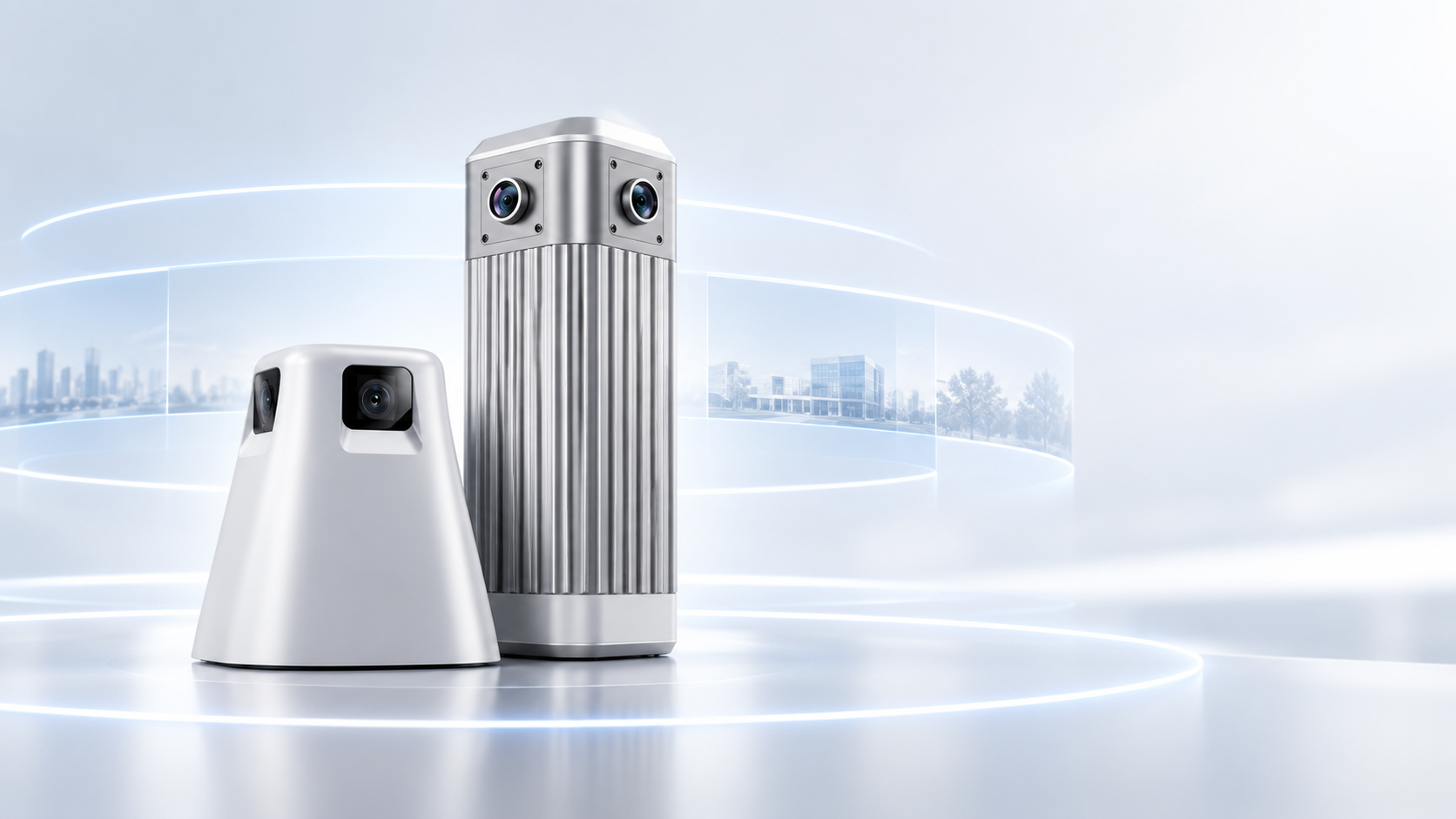
Camera comparisons often start with resolution, sensor count, field of view, or whether a product offers “360°.” But those specifications alone do not answer the more important question: what was the camera architecture designed to accomplish?
PTZ, multidirectional, fisheye, 360° action, and stitched panoramic cameras may all provide wider visibility than a conventional fixed camera, but they solve different visual problems. A useful comparison therefore starts with application needs—not with a simple ranking of specifications.
There Is No Single “Best” Camera Architecture
PTZ cameras are designed to focus on important targets and capture long-range detail through optical zoom and directional control. Multidirectional cameras use multiple sensors to monitor several predefined directions at once, while fisheye cameras use an ultra-wide lens to provide a broad overview from a single installation point.
A 360° action camera serves a different purpose, typically prioritizing immersive capture, mobility, and content creation. A stitched panoramic camera combines multiple sensor inputs into a continuous panoramic scene, preserving broader spatial context for both operators and downstream systems.
That is why camera architectures are better evaluated by fit for purpose than by a single “best versus worst” ranking.
Camera Architecture at a Glance
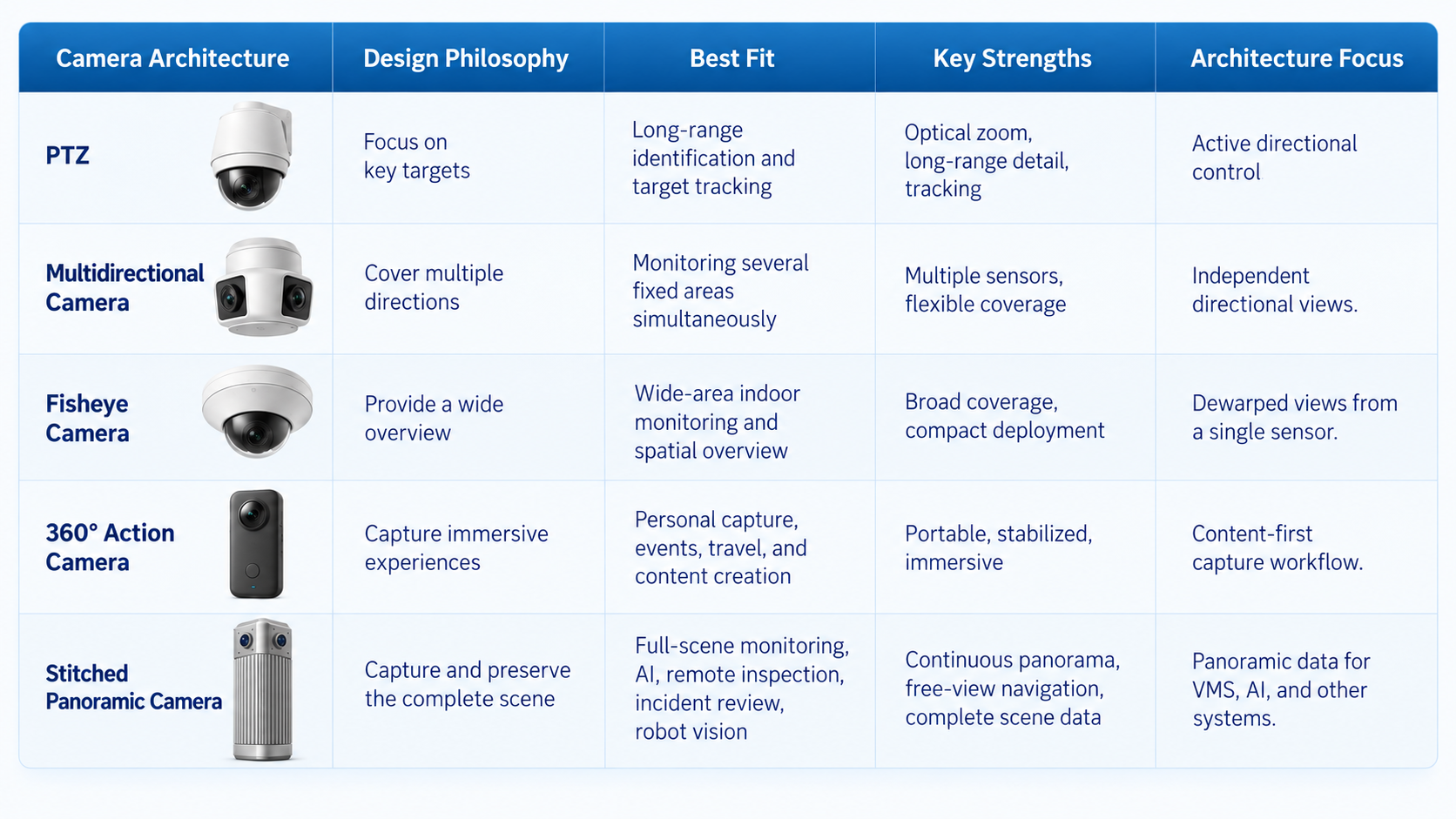
“360°” Does Not Describe the Architecture
Two products can both advertise a 360° view while producing very different forms of video data. A multidirectional camera may provide several independent views, while a fisheye camera captures one ultra-wide image that is later dewarped. An action camera may prioritize immersive playback, whereas a stitched panoramic camera combines multiple sensors into one continuous panoramic output.
For enterprise applications, the more useful questions are therefore where the panoramic data is generated, whether the final output is a set of independent views or a stitched panorama, and whether that panorama can be accessed directly by VMS, AI, robotic, or other operational systems. These are also the core questions that enterprises should confirm first when evaluating a panoramic camera architecture.
Look Beyond 4K vs. 8K
Resolution matters, but sensor resolution alone does not describe what an operational system actually receives. For AI analytics, remote inspection, and robotic applications, stitched resolution, latency, scene continuity, data accessibility, and deployment efficiency can be just as important.
For example, what happens when a person, AGV, or vehicle moves across a sensor seam? How long does it take for the complete panorama to reach a VMS or AI server? Can the stitched stream be accessed through standard interfaces? And how much bandwidth, power, and storage are required for the target coverage and quality? In practical evaluation, image stability at stitching seams for moving objects, latency, effective stitched resolution, calibration stability, data accessibility, and deployment efficiency often reveal more about the architecture than simply comparing “8K versus 4K.”
Cupola360’s Design Direction: Make Panoramic Data Usable
Real-time stitching is only one part of a panoramic camera architecture. For Cupola360, the more important design direction is to process panoramic data at the edge and make it usable by downstream systems.
Cupola360 uses dedicated panoramic processing to complete image correction and stitching on the device, generating a continuous panoramic video stream. This processing includes geometric correction, luminance and color correction, and projection transformation, rather than simply placing multiple camera views side by side.
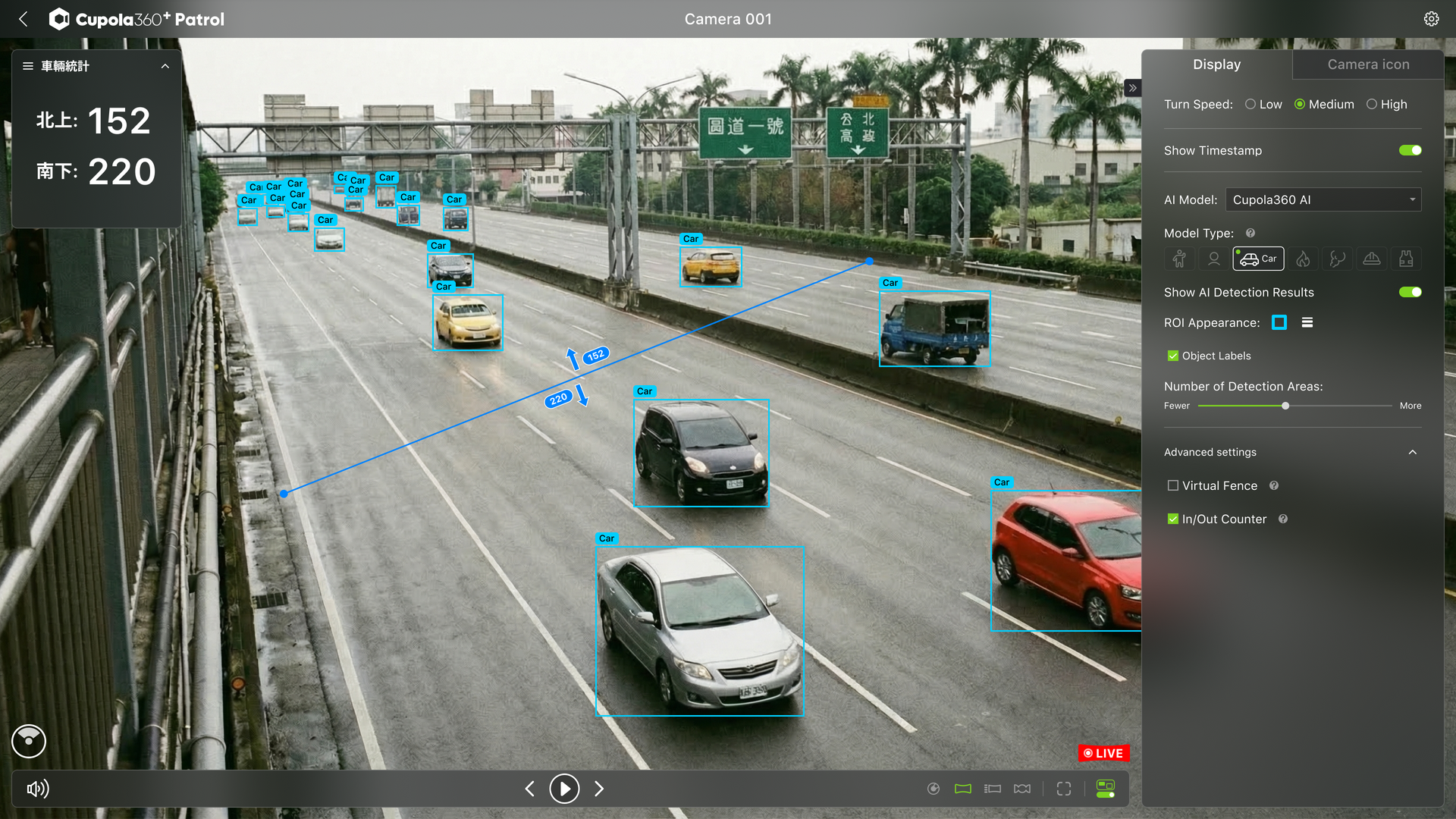
More importantly, this panoramic data can become an input for other systems. Cupola360 supports standard interfaces such as RTSP and ONVIF, and can be integrated with video management systems, AI servers, Cupola360⁺ Patrol, robotic platforms, or other industrial applications depending on the selected product and project requirements.
As a result, Cupola360 is not just another 360° camera. It provides an
open panoramic perception capability that downstream systems can actually use.
A Wider Field of View Is Not Always a Better Field of View
The largest possible FOV is not automatically the best choice for every deployment. In fixed surveillance environments, people, vehicles, and assets are often concentrated around the horizontal viewing zone, so allocating more pixels to that region can be more useful than capturing the entire sphere.
Robotics, remote inspection, and immersive applications may have very different requirements, where full-sphere 360° × 180° panoramic data becomes more valuable. Cupola360’s own portfolio follows this distinction: RX1000P is positioned around a surveillance-efficient field of view, while RX1000F and RX2000 provide full-sphere panoramic coverage for applications that require more complete spatial data.
The better question is therefore not “Which camera captures more?” but
“Which visual data is actually valuable for this application?”
What to Ask Before Choosing a Camera
Before comparing detailed specifications, first define what the site actually needs to see. Does the application require continuous full-scene awareness or detailed tracking of a specific target? Does it need one continuous panorama or several independent high-resolution directions? Will the video only be viewed by people, or will it also feed AI, VMS, robots, or other systems?
It is equally important to determine whether long-range optical detail or complete spatial context matters more, and whether the deployment is a simple capture task or a 24/7 monitoring workflow involving recording, remote operation, and third-party integration. Once these questions are clear, specifications such as resolution, sensor count, FOV, and throughput become much easier to evaluate in context.
Conclusion
PTZ cameras are strong at long-range detail. Multidirectional cameras provide flexible coverage of several planned directions. Fisheye cameras offer efficient wide-area overviews, while 360° action cameras are optimized for immersive content. Stitched panoramic cameras are designed for applications where complete scene context and downstream system integration matter.
There is no universally best camera architecture; there is only the architecture that best fits the task.
For AI analytics, remote inspection, robotic vision, incident review, and Reality Remote Management, the key question is not simply whether a camera can “see 360°.” It is whether the panoramic data is complete, timely, and usable by the systems that need it.
Related Articles