

AI Data Center Digital Twin | Panoramic Vision and Remote Operations
Connecting panoramic vision and physical data through a digital twin for smarter data center operations.
AI Data Center Operations Go Beyond the Server
As AI computing continues to increase rack density and power demand, data centers are moving toward more complex power distribution, cooling, and infrastructure architectures.
Traditional server management systems already provide detailed information on temperature, voltage, fans, and system health. But as individual racks carry more GPUs, power equipment, and cooling infrastructure, many operational signals now exist outside the server itself.
Operation teams may also need to understand:
- The condition of PDUs, UPS systems, and electrical nodes
- Local temperature increases around racks or equipment
- Potential abnormalities around liquid cooling infrastructure
- Rack door status and equipment position changes
- Equipment indicators, QR codes, and asset labels
- What was physically happening around an equipment alert
Much of this information remains distributed across different devices, interfaces, and management systems. Some conditions still require personnel to physically inspect the site. As data centers become larger and denser, relying only on additional manual inspection becomes increasingly difficult to scale.
Making the Physical Data Center Visible
For a digital twin to support real data center operations, equipment lists and numerical data alone are not enough.
Operators also need to understand where an asset is physically located, what surrounds it, and what the actual environment looks like when an abnormal condition occurs.
Cupola360 provides the site-level panoramic visual layer within this collaborative solution.
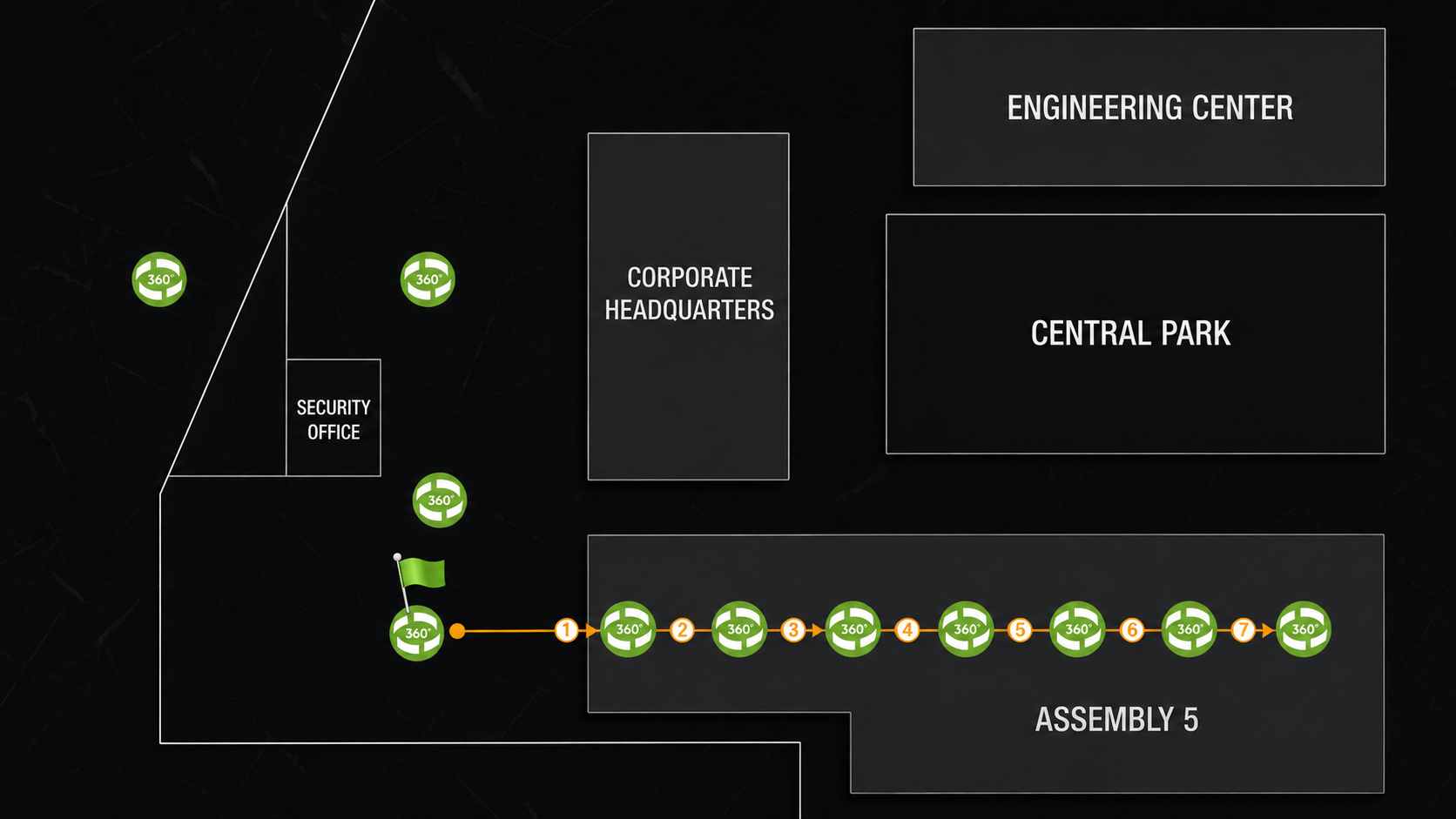
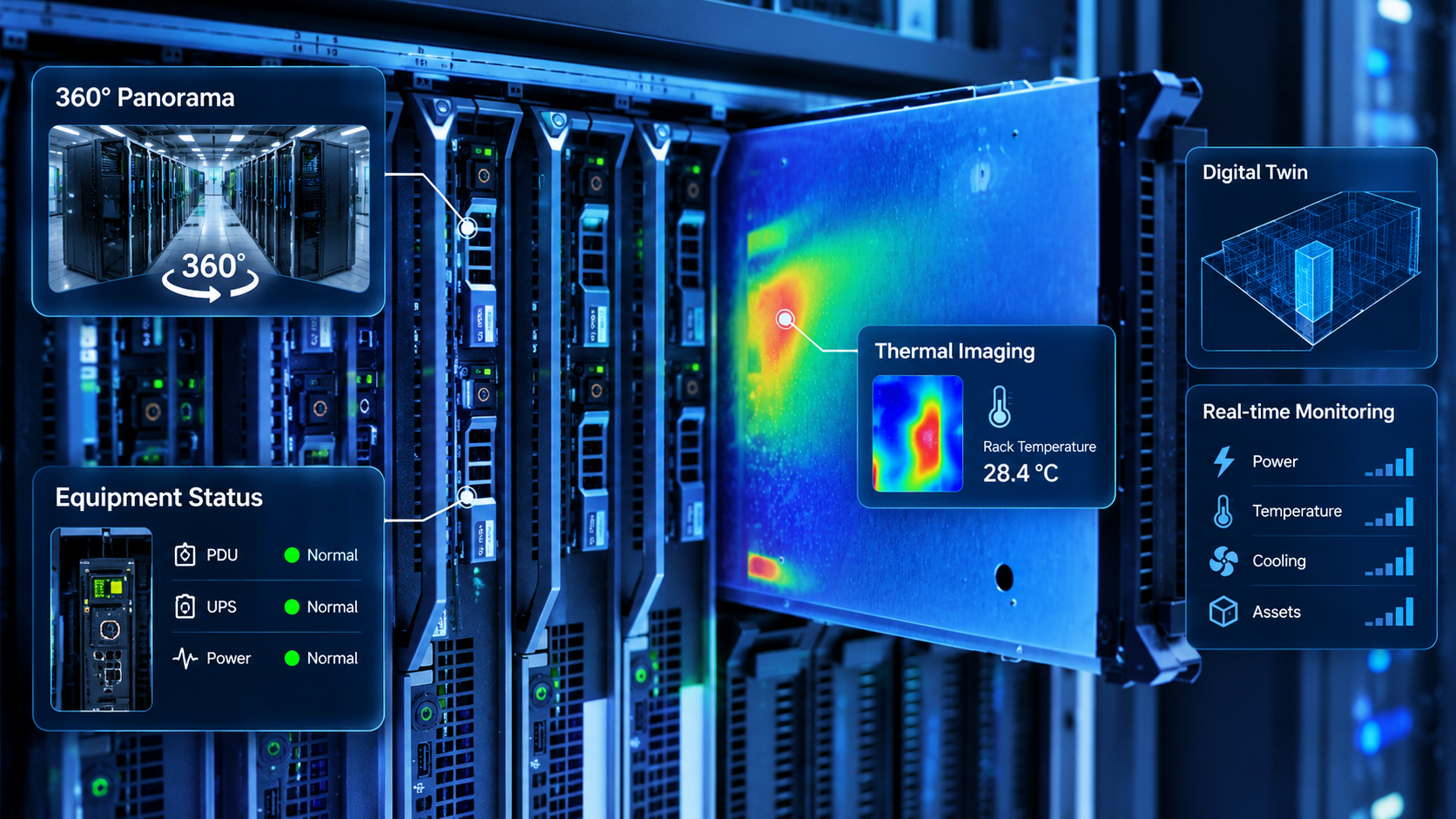
With 360° panoramic cameras, operation teams can view the broader data hall, rack layout, and surrounding environment within a more complete spatial context. When an abnormal condition occurs, operators can understand where the event is taking place and what is happening around it instead of relying only on a single fixed camera view.
The solution can also incorporate equipment-level sensing and close-range imaging for PDUs, UPS systems, status indicators, asset labels, and localized thermal conditions.
This creates a visual workflow that moves naturally from: the room → the rack → the equipment while maintaining the spatial relationship between each level.
Bringing Video, Equipment Status, and Power Data into the Digital Twin
The goal is not simply to add more cameras to the data center.
The greater value comes from connecting different sources of Physical Data to their real-world locations.
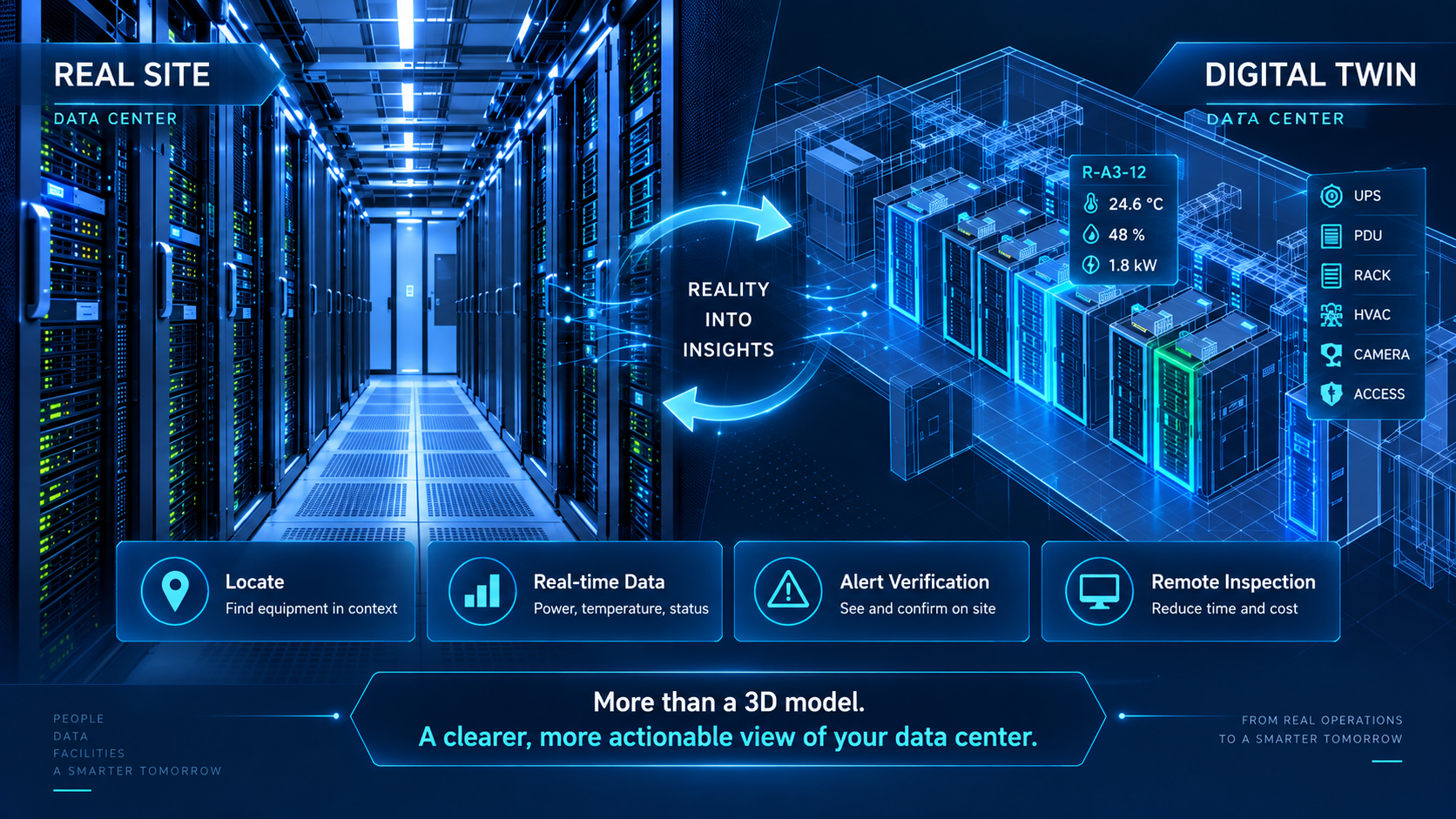
A digital twin can map rooms, racks, UPS systems, PDUs, sensors, and cameras to the physical environment and connect them with:
- 360° panoramic video
- Equipment-level visual feeds
- Thermal information
- Power data
- Cooling information
- Equipment alarms
- Historical operating data
This allows operators to understand equipment status in its real spatial context rather than as an isolated value on a dashboard.
When an overheating alert appears, for example, the operator can move from the equipment location in the digital twin to the corresponding panoramic view, close-range equipment information, thermal condition, and historical trend.
The workflow can therefore shift from:
Alert → Locate → Visit the site → Inspect
toward:
Alert → Locate → View the site → Compare the data
reducing the gap between knowing that something is wrong and understanding what is actually happening.
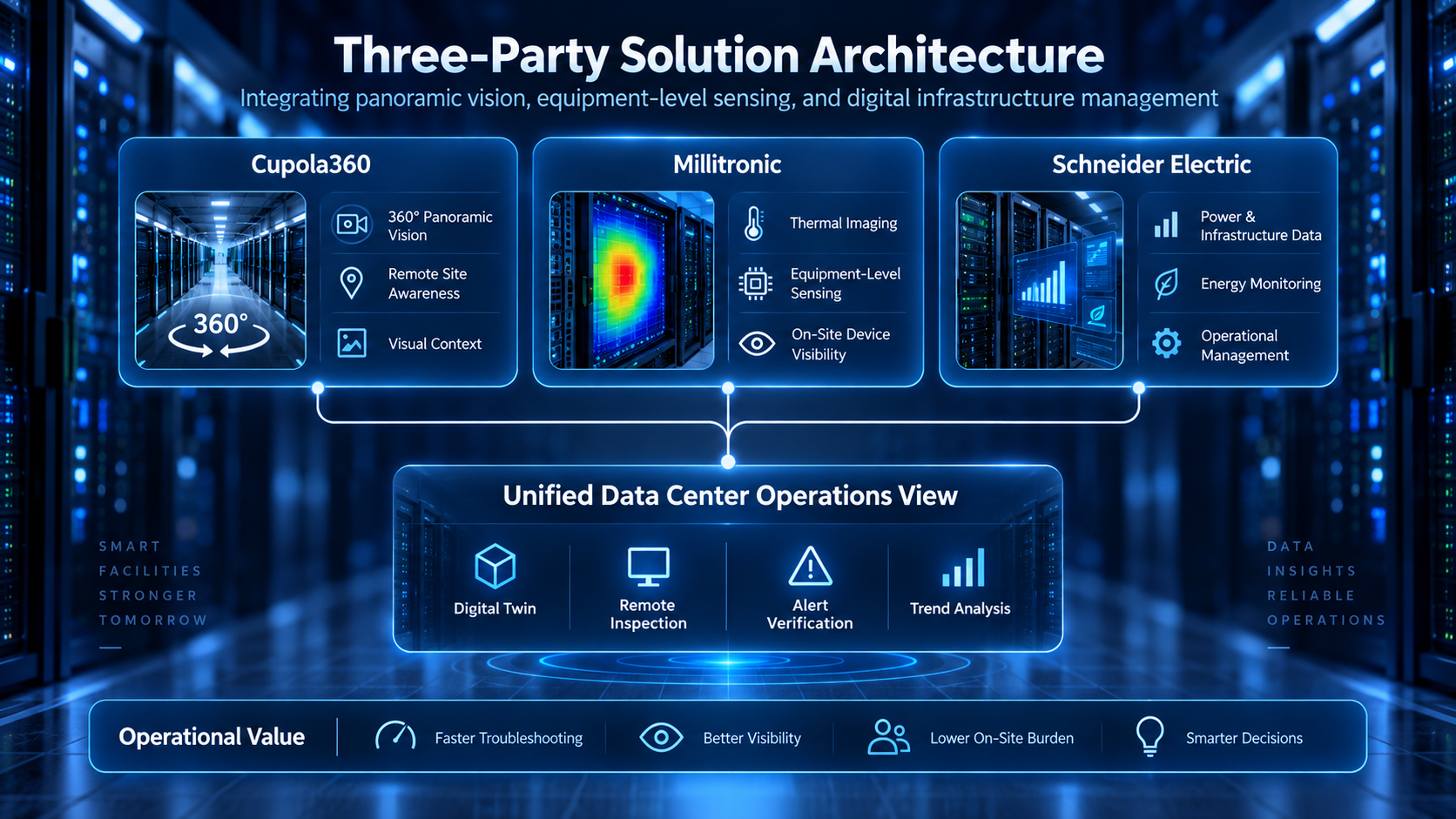
How the Partner Technologies Work Together
The solution combines different technology layers, each contributing a different part of the operational picture.
Cupola360 | Site-Level Panoramic Vision
Cupola360 provides 360° panoramic visual coverage of the data hall, rack layout, and surrounding environment.
Compared with isolated fixed-camera views, panoramic vision preserves broader spatial context and helps operators understand where an abnormal condition occurs and what surrounds it.
Millitronic|Equipment-Level Vision and Sensing
Close-range sensing and imaging provide detailed visibility into racks, PDUs, UPS systems, equipment indicators, asset labels, and localized thermal conditions.
Together with panoramic vision, this allows the solution to support both site-level awareness and equipment-level inspection.
Schneider Electric | Infrastructure, Energy, and Long-Term Operational Data
Schneider Electric contributes data center infrastructure, power, and energy management capabilities that connect physical information with existing power, cooling, capacity, and equipment management data.
By accumulating historical information and analyzing long-term trends, operation teams can monitor changes in power consumption, temperature, cooling efficiency, capacity utilization, and equipment condition, helping them identify conditions that begin to deviate from normal operating baselines.
From Seeing an Alert to Understanding It
Remote operations should not simply move more screens into a control room. A useful operational workflow should help teams move from detection to location, verification, and review.
When panoramic video, equipment imagery, thermal information, power data, and historical trends are connected, the system can support:
Remote Inspection
Review data halls, racks, and key equipment without visiting each location in person.
Abnormality Localization
Move directly from an alert to the corresponding equipment, physical location, and visual context.
Cross-Source Verification
Compare status indicators, temperature, power values, and live visual information together.
Event Review
Use historical data and video to understand how conditions changed before and after an event.
Early Warning and Predictive Maintenance
As historical data accumulates, AI analysis can gradually support trend-based warning for thermal, electrical, and equipment abnormalities and provide a foundation for predictive maintenance.
The goal is not to replace data center operators with AI, but to give them more complete physical and historical context when decisions are required.
A Digital Twin Is More Than a 3D Data Center Model
Digital twin discussions can easily become focused on 3D visualization itself.
But an operational digital twin creates more value when the virtual environment remains connected to real equipment, live information, and physical site conditions.
Selecting a rack should not only show where it appears in a 3D model. It should also connect the operator to relevant power status, temperature, equipment information, alarm history, and the actual visual environment around that rack.
This transforms the digital twin from a visualization tool into an operational interface for the physical data center.
Complementing Existing Management Systems with Physical Visibility
This solution is not intended to replace BMC, DCIM, EPMS, or other existing server and infrastructure management platforms.
Instead, it adds something these systems may not directly provide: Physical Visibility.
- What does the equipment actually look like right now?
- Where is it physically located?
- What is happening around it?
- Can a numerical abnormality be verified through the actual site view?
A more precise way to describe the solution is therefore:
Extending data center visibility and operational management from inside the server to the entire physical environment.
Turning Physical Data into More Proactive Data Center Operations
As AI data centers move toward higher power density, greater computing capacity, and more complex cooling and power architectures, operational risk increasingly extends beyond server health.
Racks, power infrastructure, thermal conditions, liquid cooling, equipment indicators, and the surrounding physical environment are all becoming part of the operational data set.
By combining Cupola360 panoramic vision, equipment-level sensing, and Schneider Electric’s infrastructure, energy, and long-term operational data capabilities, distributed Physical Data can be transformed into information that is more visible, traceable, and easier to interpret.
The next step for data center operations is not simply connecting more equipment to software. It is making what happens in the physical world part of the digital operational workflow..
Key Highlights
- Establishes site-level Physical Visibility through 360° panoramic vision
- Combines equipment-level sensing and thermal information for detailed rack and device inspection
- Maps visual, power, cooling, environmental, and equipment information into a digital twin
- Connects alerts with equipment location, live visual context, and historical trends
- Supports remote inspection, abnormality localization, cross-source verification, and event review
- Uses long-term operational data to support energy, capacity, and trend analysis
- Creates a data foundation for future AI-based early warning and predictive maintenance
- Complements BMC, DCIM, and EPMS platforms with physical site context
Related Resources
Related Prodcuts
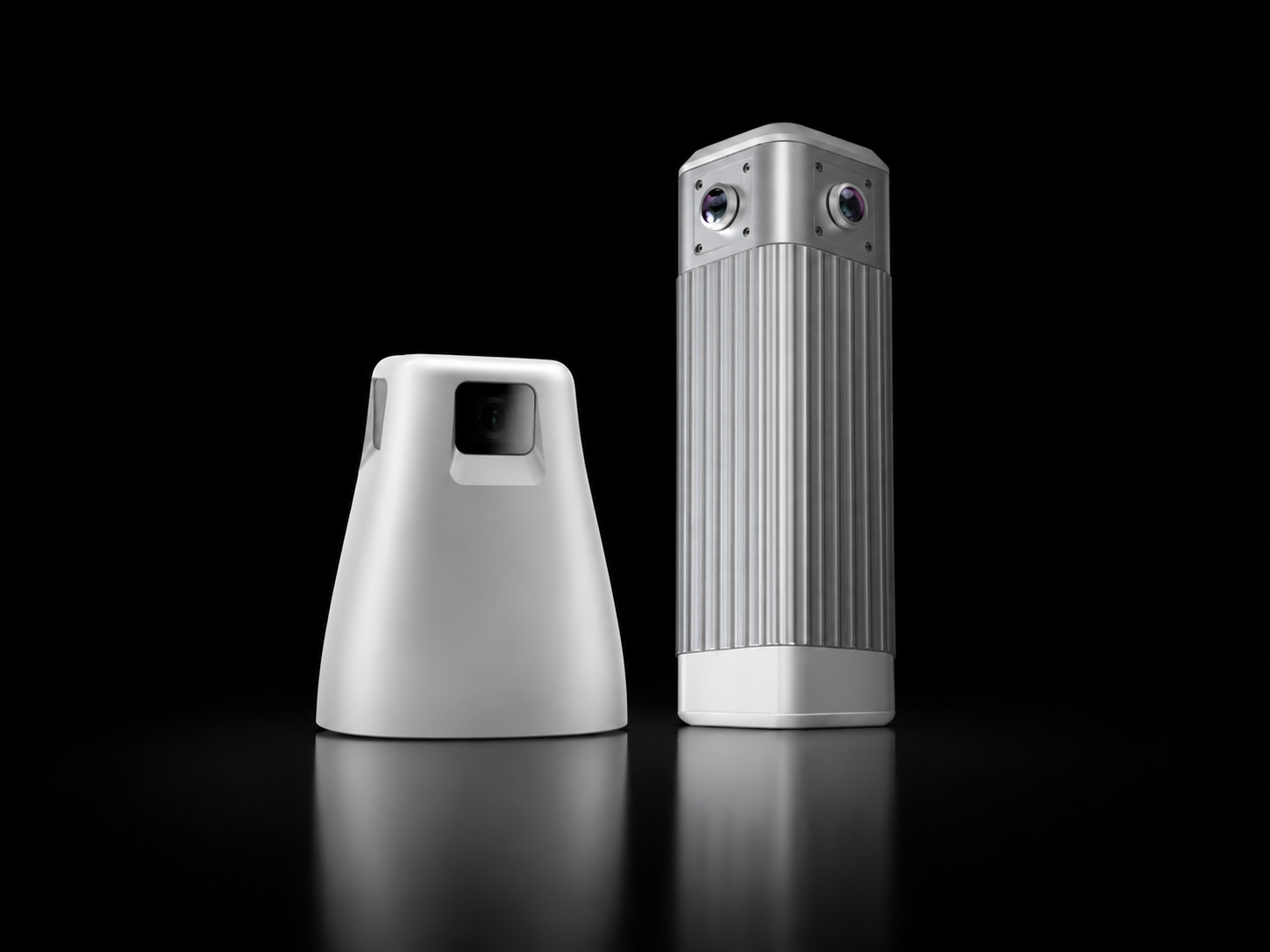
Panoramic Camera
Related Articles