Japan’s Growing Bear Encounters: How 360° AI Vision Can Support Safer Field Awareness
Using panoramic cameras and AI detection to monitor outdoor areas, reduce blind spots, and respond with better context.
In Japan, bear encounters have become a growing safety concern, not only in mountain areas but also around residential communities, factories, tourism sites, and remote facilities. As wildlife activity moves closer to human environments, early detection and wider field awareness are becoming increasingly important.
For operators managing outdoor sites, the challenge is not only detecting a bear after it appears. The real challenge is understanding the surrounding area: where the risk is coming from, how close it is to people or buildings, and how the situation is changing over time.
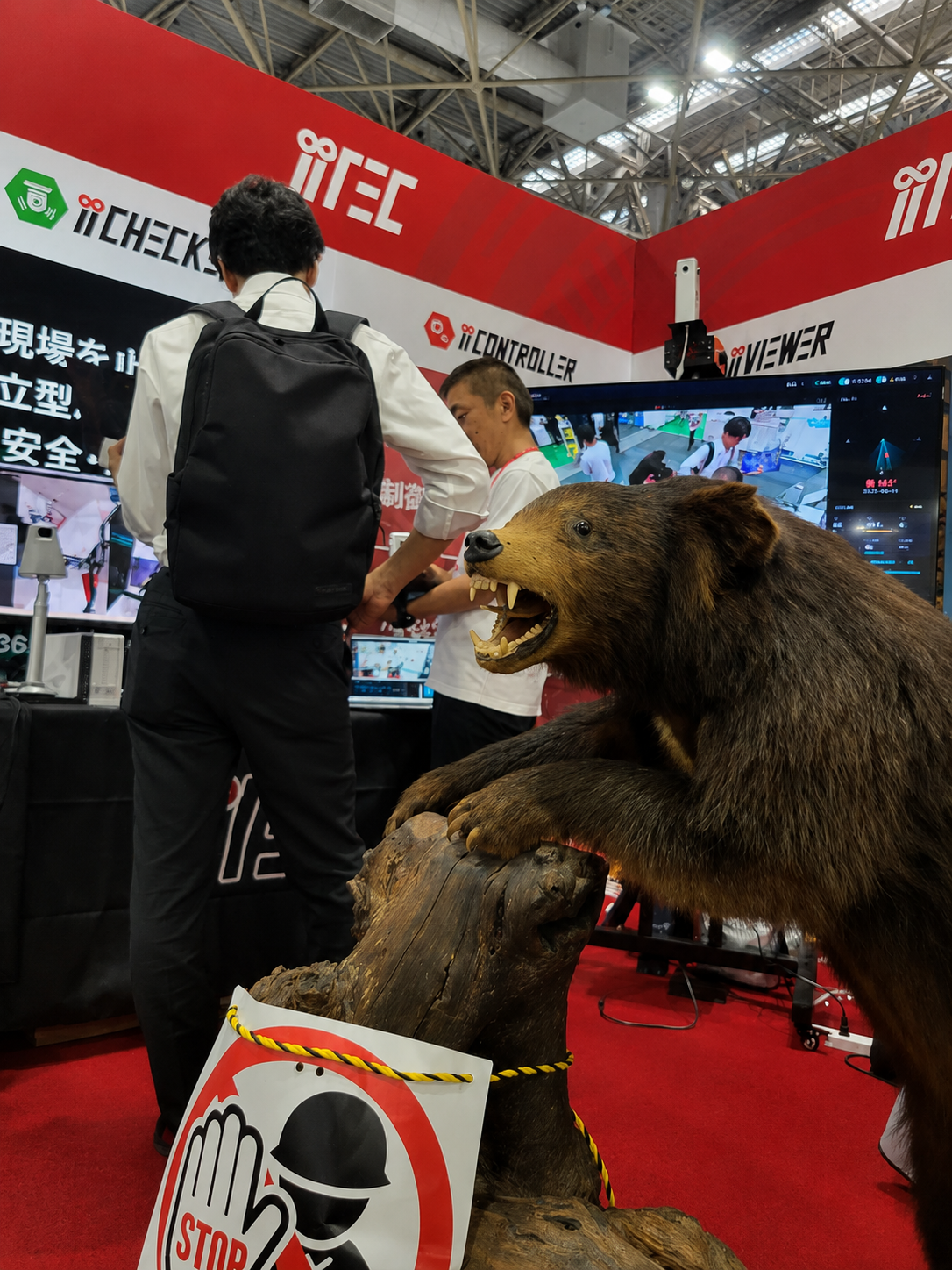
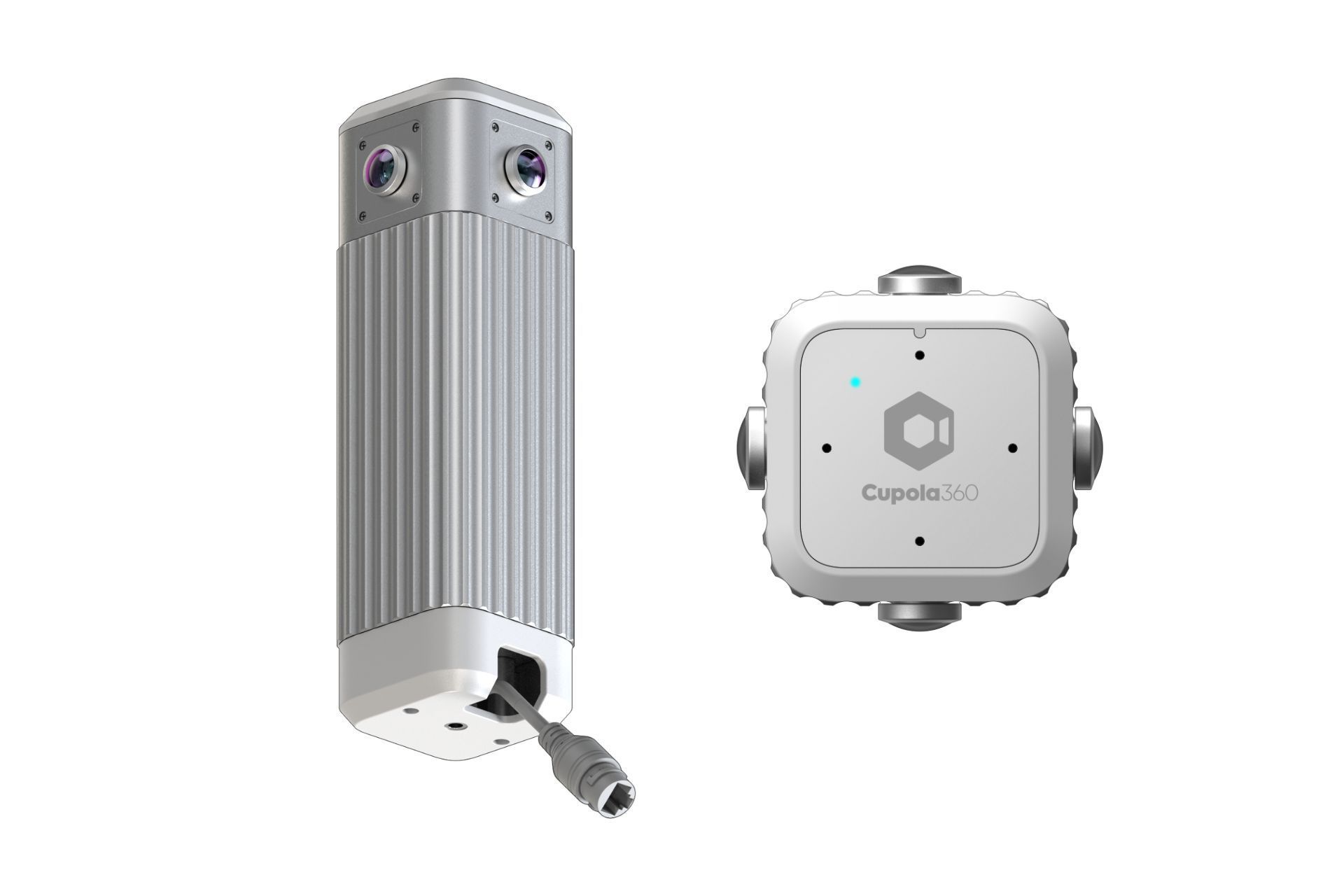
At a recent exhibition in Osaka, Cupola360’s Japan partner iiTEC Co., Ltd. showcased an application using Cupola360 360° cameras with AI to support real-time bear detection and field monitoring. This example shows how panoramic vision can support a broader category of wildlife safety and outdoor monitoring applications.
The Challenge: Bear Encounters Are Moving Closer to Human Environments
Wildlife safety is becoming an important issue for many outdoor and semi-remote environments. Residential areas near mountains, factories located close to natural surroundings, tourism sites, parks, campsites, and public facilities may all face unexpected wildlife activity.
In these environments, safety teams often need to monitor wide and open areas. A risk may appear from any direction, move quickly, or enter from a place that is not covered by a traditional camera angle.
For bear detection, this is especially important. Early awareness can give operators more time to notify staff, guide people away from the area, and coordinate a safer response.
Why Fixed-View Cameras May Leave Outdoor Blind Spots
Traditional cameras are useful for focused monitoring, but they usually cover only one direction at a time. In outdoor environments, this can create blind spots between camera angles or behind objects, trees, buildings, vehicles, and uneven terrain.
To cover a wider site, teams may need to install multiple cameras and monitor several separate video feeds. Even then, operators may still need to switch between views to understand the full situation.
For field safety, fragmented visibility can slow down response. When a potential risk appears, operators need to understand the full scene quickly, not only a single fixed view..
The Application: 360° Cameras with AI Bear Detection
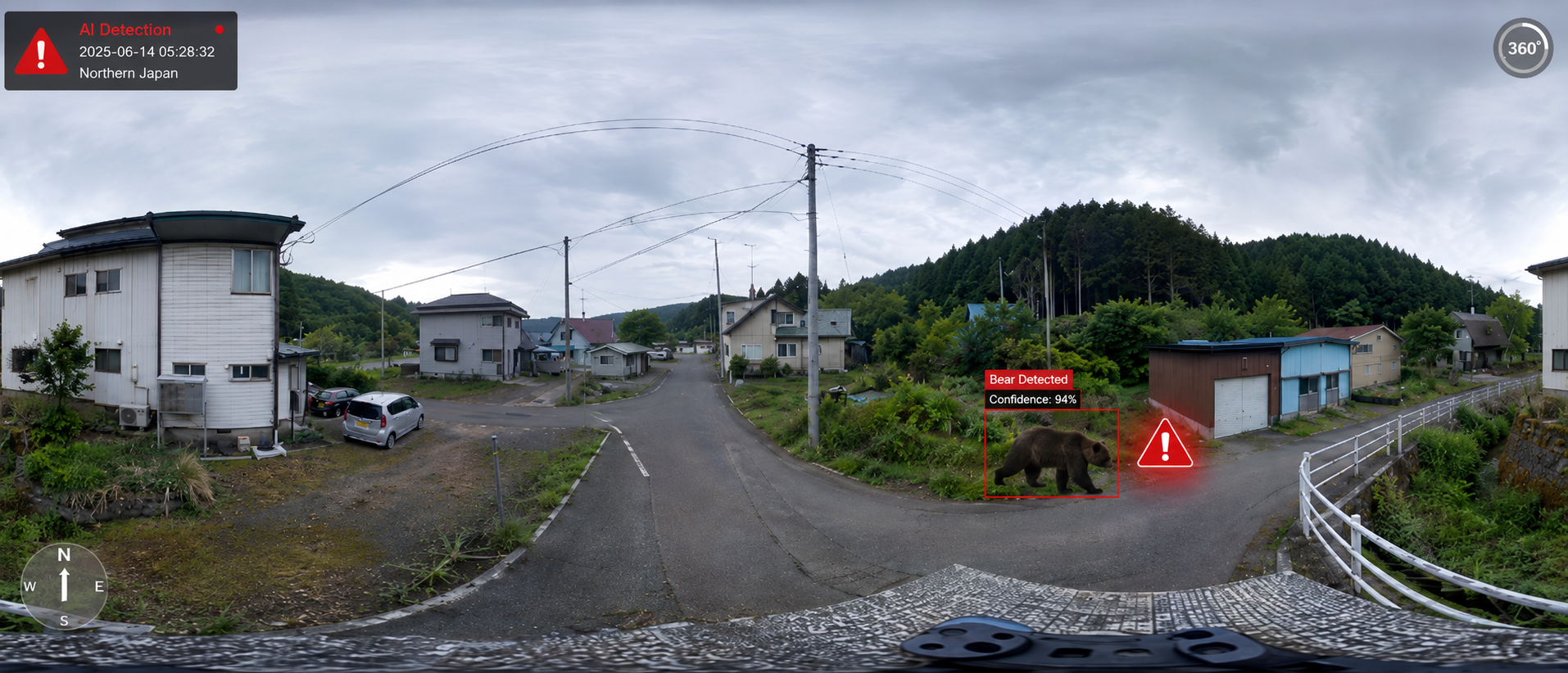
A 360° panoramic camera provides a complete surrounding view from a single point. When combined with AI detection, the system can continuously analyse a wider scene and help identify potential risks earlier.
In a bear detection scenario, AI can be configured to detect specific objects or movements within defined areas. When a potential risk is identified, the system can support real-time alerts for field operators.
This type of application can help support:
- Bear detection in defined outdoor areas
- Real-time alerting for field operators
- Full-scene video records for event review
- Wider site awareness with fewer blind spots
- Remote monitoring for facilities, tourism sites, and public spaces

Note: Conceptual illustration for demonstration purposes only; not an actual deployment image or verified detection result.
Why Panoramic Vision Matters for Field Awareness
The value of 360° vision is not only wider coverage. It also helps operators understand the full context around an event.
In outdoor environments, context matters. Operators may need to know where an animal entered, whether people are nearby, how close the risk is to buildings or work areas, and whether the situation is moving toward or away from a critical zone.
A panoramic view helps provide this context in one continuous scene. Instead of switching between multiple disconnected camera angles, operators can view the surrounding environment more intuitively and make faster decisions.
This is especially useful for sites where staff cannot constantly monitor every direction in person, such as remote facilities, mountain areas, factories near natural surroundings, parks, tourism destinations, and public spaces.
Beyond Bear Detection: Wider Outdoor Safety Applications
Although this example focuses on bear detection in Japan, the same 360° AI vision architecture can support many other outdoor safety applications.
With the right AI model and integration, panoramic visual data can be used for:
- Wildlife monitoring
- Intrusion detection
- Perimeter security
- Factory boundary monitoring
- Warehouse and logistics yard monitoring
- Smart city public safety
- Tourism site monitoring
- Remote facility awareness
Many of these applications share the same core challenge: teams need earlier detection, fewer blind spots, and better situational awareness before they can respond effectively.
Cupola360’s Role: A 360° Vision Platform for AI Partners
In partner-driven AI applications, Cupola360 provides the 360° panoramic camera and visual platform that AI partners, system integrators, and solution providers can build on top of.
A 360° camera is more than a camera. It can serve as the visual foundation for AI applications by providing wide-area panoramic data for detection, alerting, monitoring, and event review.
For wildlife detection and other outdoor safety applications, this means partners can combine their AI capabilities with Cupola360’s panoramic vision to create solutions for specific industries, sites, and operating environments.
Cupola360 is excited to see partners such as iiTEC bringing innovative 360° AI vision applications into the field. As outdoor safety challenges continue to evolve, panoramic vision can help create more flexible and context-aware monitoring systems across different industries.
Related Resources
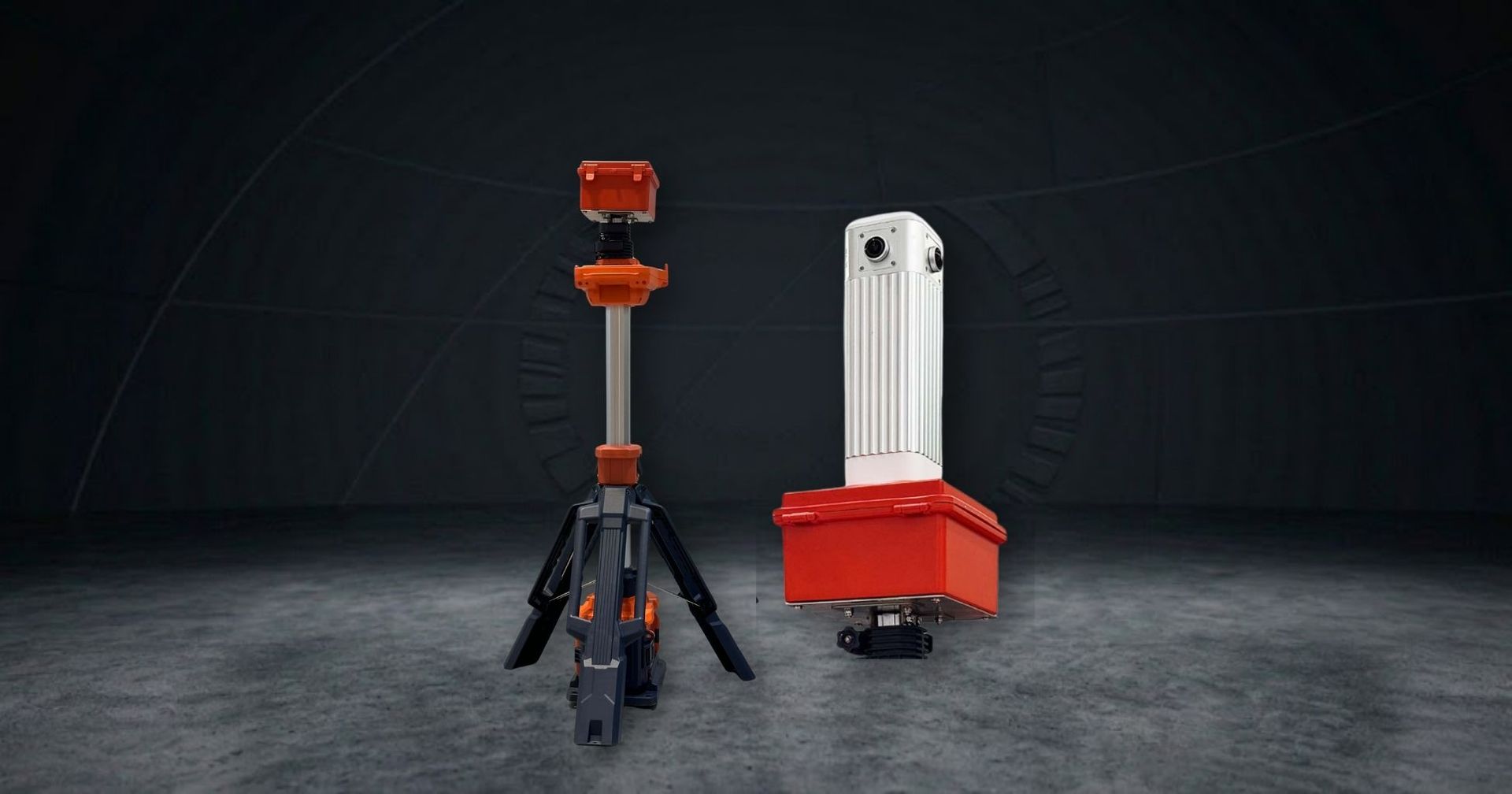
Panoramic Mobile Live Kit
Mobile Stand + 360° Camera